

Gayming Lore: BioWare’s Closure, LGBTQ+ Legacy and What May Come Next
On October 21, Bloomberg’s Jason Schreier broke the story that Electronic Arts (EA) was closing BioWare as part of a wider round of cuts affecting about 400 jobs, roughly 50 of them at the studio. Founded in 1995, the Canadian studio was responsible for many of the genre-defining RPGs we have come to love, such as Baldur’s Gate, Star Wars: Knights of the Old Republic, Mass Effect and Dragon Age: Origins.
The closure, sadly, isn’t much of a surprise. While BioWare established itself as a stalwart of industry-defining RPG development, many fans have long argued that the studio was doomed from the moment EA acquired it in 2007.
Those fears only grew in August, when the deal for Saudi Arabia’s Public Investment Fund (PIF), Jared Kushner’s Affinity Partners and private equity firm Silver Lake to buy EA for $55 billion was completed—the largest leveraged buyout in history. It had first been announced in September 2025.
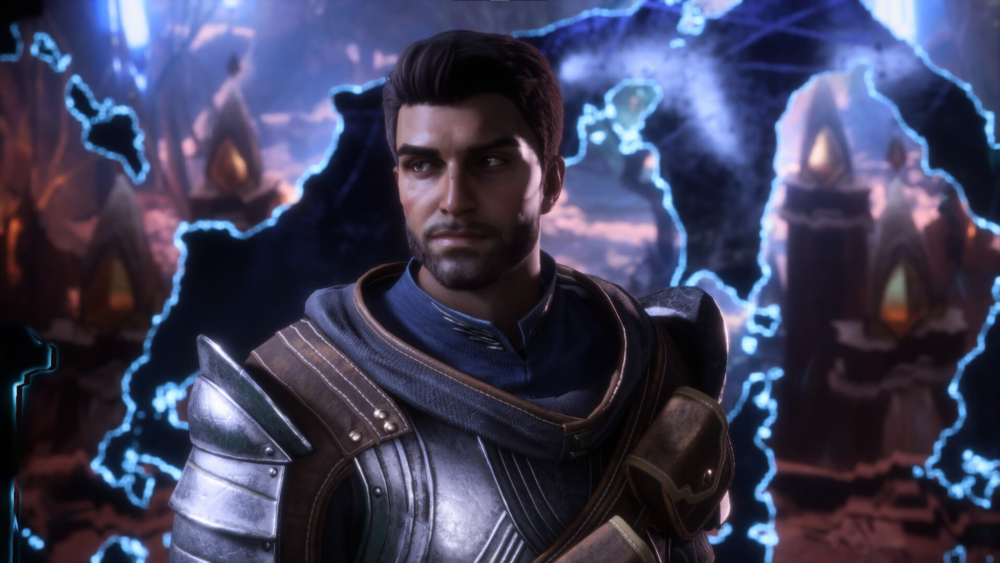
The 2024 release of Dragon Age: The Veilguard now looks like a particular omen of BioWare’s downfall. Intended to close the Dread Wolf storyline—and now, in effect, the last Dragon Age game—it went through development hell, with a mid-development pivot away from live service causing significant delays and a growing workload. It eventually launched as a single-player RPG, and EA CEO Andrew Wilson later attributed its lackluster reception partly to its lack of live-service components.

Despite such turmoil, it’s worth remembering that BioWare made some of the industry’s most influential RPGs, particularly when it comes to LGBTQ+ representation. The Mass Effect series gave us an expansive space opera with same-sex romances, from Liara in the first game to Steve Cortez in Mass Effect 3. Dragon Age II popularized the dated-but-influential “playersexuality” design trend, Dragon Age: Inquisition gave us Dorian, a gay mage whose personal quest confronts a father who tried to change him, and Krem, a trans man, while The Veilguard introduced Taash, a non-binary companion with their own coming-out story.

Following the studio’s closure, fans have been quick to question what will happen to these influential games now that EA is under the purview of the PIF and Kushner. When the deal was announced, Wilson promised that EA’s “values and our commitment to players and fans around the world remain unchanged”—but the closure of BioWare a year on has done little to reassure them.



Currently, “same-sex sexual activity” is prohibited in Saudi Arabia, with evidence that LGBTQ+ people and activists are regularly arrested and killed. Kushner’s involvement also ties the company to the Trump family at a time when trans Americans are increasingly relocating to other states or countries for their safety, some even claiming asylum.

It is sad to see BioWare close its doors; it was a legendary champion of LGBTQ+ representation in RPGs. The day after the closure, a trailer for the canceled fifth Mass Effect game, titled Mass Effect: Universe, leaked online, and Schreier later confirmed it was genuine.
Fans and commentators are already arguing that Mass Effect is too big to die with BioWare, and Amazon’s Mass Effect TV series is reportedly still in production.

We can still appreciate all that BioWare has given us, and maybe the next Mass Effect is somehow still in the cards. The reality, though, is that EA is now under the umbrella of the PIF, Saudi Arabia’s sovereign wealth fund, whose investments serve the state’s Vision 2030 agenda—with Kushner floating somewhere in the background.
For now, I think we can appreciate what BioWare gave us, but we may also need to let it go, and look elsewhere for the next innovations in LGBTQ+ representation in video games.
About The Author