
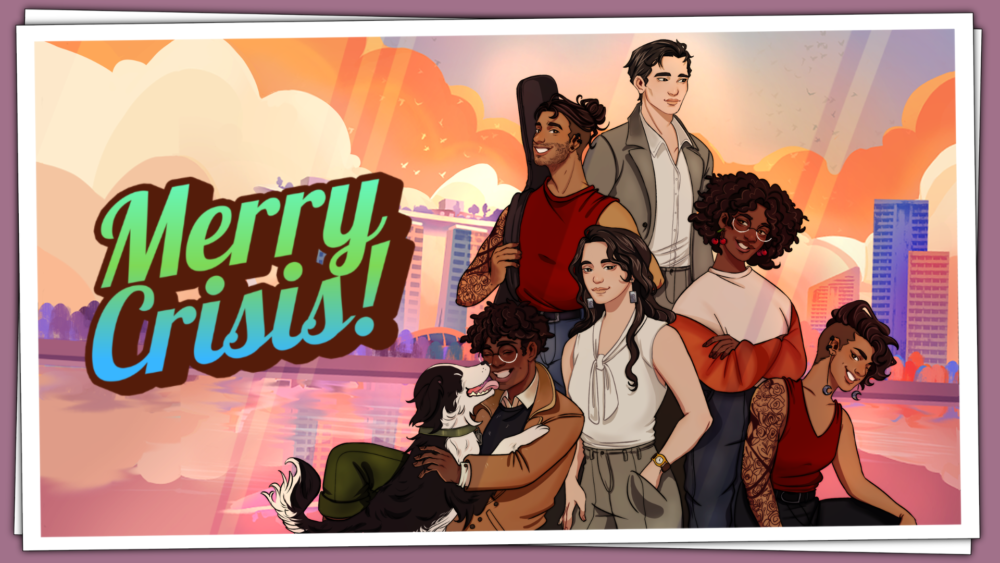
Merry Crisis Interview: Queer Visual Novel Launches Dec 9, 2026
It’s Christmas Eve, you’ve just been dumped, and you’re flying home to Singapore in the hope that a change of scene might help. It doesn’t quite work out that way. That’s the premise of Merry Crisis, a queer romance visual novel from Singapore indie studio Monsoon Games. The team has just put out a new trailer, and we’re excited to reveal the game launches on December 9, 2026.
At a class reunion you bump into Qiu, your estranged first love. There’s Shay, the musician who’s moved in next door and is hard to ignore. And there’s Nat, the ex you’re not over. By midnight on New Year’s Eve, you have to decide whether your life is back in America or here in Singapore. The game is longer than you might expect, with more than 240,000 words, 8-plus hours of play and at least 7 endings. You also decide the protagonist’s gender, sexuality and family setup, and that changes a lot about how the week plays out.
Monsoon founder Allie Wu, who is also an urban planner, writes and programs the game. Merry Crisis began as a text-based game and built up a 4,300-strong Tumblr following. Allie brought artists on board in 2025 to turn it into a fully illustrated visual novel. It was also one of the demos at Steam Next Fest last month (October 19–26).
I caught up with Allie to talk about why it had to be Christmas, and what it means to tell a queer Southeast Asian love story.

Robin: What made Christmas the right backdrop for this story?
Allie: I spent four years overseas, and coming home for Christmas was always hectic: all the joy and heartbreak of being home, concentrated into one week. Cue existential crisis.
The idea for the game literally came from one of those weeks. I typed up the first chapter after a sleepless night in my childhood bedroom. My aunt had asked why I wasn’t married yet, my parents wanted to know what I was still doing in New York, and I was wondering when to tell them about the queer relationship I was in at the time.


I think there’s something universal in that feeling. The what-ifs hit hardest at the end of the year, and the week between Christmas and New Year’s can feel so removed from real life that it becomes magical, like a bonus stage in a video game where anything could happen. It’s just the right length of time for a life to transform, or for you to do something completely reckless.
What did you hope queer players would recognise of themselves in Merry Crisis?
As a queer woman, a lot of the game draws from personal experience, or stories I’d heard from friends. There are so few queer holiday stories, and even fewer that are Southeast Asian. More than anything, I wanted to write a love story that more people could see themselves in.
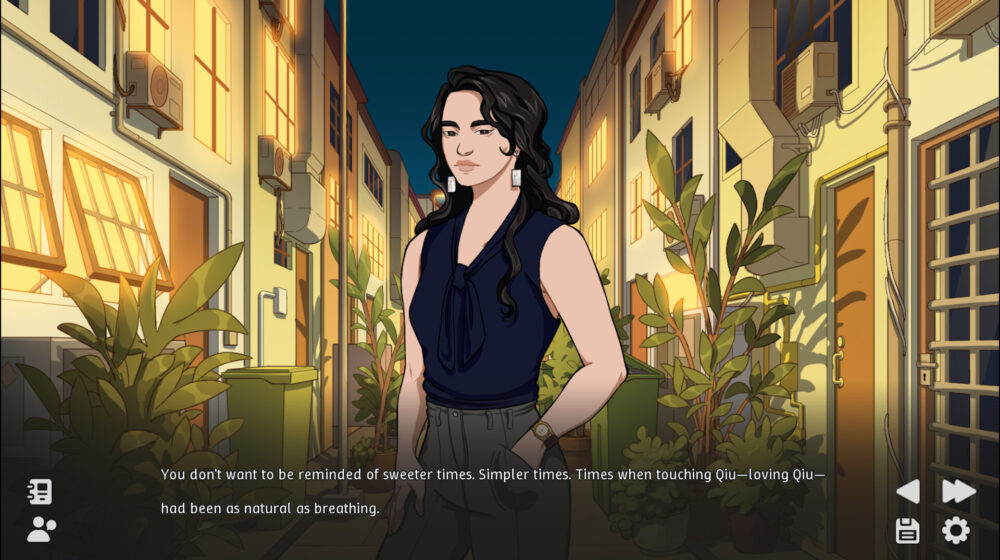
Qiu’s route, for example, is a coming-of-age first love story built from small, real moments: holding hands under a desk at school, waiting out a downpour together at a bus stop, homophobic parents and a slammed door, meeting again when you’re older, and trying to answer the question of whether it’s too late to rewrite the ending. I think that’s why it lands. I’ve had so many messages from players of the text-based version saying Qiu’s route made them cry. Someone even wrote a song about Qiu, which is how I ended up working with singer-songwriter Nikka on the official soundtrack.

But I wanted the game to celebrate queer joy, too. Sure, there’s reconciling with your first love over dumplings in the kitchen of their rented flat, but there’s every other flavour too: flirting with your sexy neighbour through pancakes and karaoke, continuing to stay in the same flat as your ex because New York rent is crazy… Real happiness is possible alongside the heartbreak.
What’s been the early feedback from people who’ve tried the demo?
The community has carried and shaped this project right from the start. I began Merry Crisis as a text-based game at the end of 2023 and released it chapter by chapter. Throughout the journey I’ve had messages from subscribers all over the world telling me how much it moved them.
One player wrote: “I’m not Singaporean, nor Chinese, or even American… Culturally speaking, we have nothing in common. But there were so many moments where I saw parts of myself reflected… feeling torn between different places, feeling like a stranger no matter where you are… being queer while fearing coming out to your parents.”
Another: “As a[n] oldest child, Chinese Malaysian currently studying for my A levels who moved to Singapore … it feels as if this was made specifically for me. I have never felt so represented i[n] a piece of media before. I played through the whole demo in a day and it brought up so many feelings wondering whether leaving home is really the right choice and the inevitable homesickness I know I’ll eventually experience either way.”
And one player kept it really straightforward: “Sweet GOD the break up scene… destroyed [me]. I literally cried so much.”
The in-person reactions have really stayed with me too. When a Singaporean stand-up comedian played it, she immediately recognised the river at Clarke Quay: “Oh! Best paktor (dating) spot!” At LEVEL UP KL, people stayed at our booth and played the demo all the way through. Several told me it felt cathartic because they’d just been through a break-up and needed to feel like things would get better. Another came back the next day with all their friends, excitedly telling them they could choose the gender of not just the protagonist, but every love interest. One person said the line where the protagonist isn’t sure they could live a full life in Singapore as a queer person hit close to home.
What has it been like creating a queer love story as a developer based in Southeast Asia?
You don’t see much of Singapore in the media beyond Crazy Rich Asians, which, not being rich, I don’t really relate to. So, part of this game is me writing a love letter to my city: real parks, real beaches, places where I’ve fallen in love and had my heart broken. There’s an island in the second-to-last chapter where I once told someone I didn’t like them back, then sat next to them on the bus while they cried the whole way home. That island made its way into the game.
Spotlighting queer Asian experiences is something that’s close to my heart. A narrative game lets you really explore how queerness intersects with family, with society’s expectations, and with trying to figure out what love and home look like.
Singapore only decriminalised homosexuality in 2022. What has or hasn’t changed since then, in your opinion?
There are still so many ways queer love and queer pain are made invisible. For instance, same-sex marriage isn’t recognised, so queer couples can’t apply for a public housing flat together, in a country where around 80% of people live in public housing. You have to apply as a single. All of that is in the game. But as a character in the game puts it: “I’m not leaving. I’m not letting someone else tell me where I can or can’t be. This is home for me, too.”
How do the choices players make about who the protagonist is change the story?
There are distinct storylines and scenes depending on whether the protagonist is in a same-sex relationship or transitioned after junior college, plus lots of smaller ways their family and love interests react to them. In a queer playthrough, for example, Shay opens up about what it’s like to be queer in Singapore, and Qiu and the protagonist have a different version of their backstory too.
Family scenes shift with your choices too. You might blurt out to your aunt at the family dinner that you’re dating a New Yorker, of the same gender, and deal with the fallout. Or you might have a quieter conversation with your mum about Nat, and why she was never supportive of the relationship. The pressure to move home, and how the protagonist feels about what kind of life is possible for them in Singapore, shifts with those identities and choices.
What does each of the three love interests bring out in the protagonist?
Each one is a person, but also a reflection of your relationship with home.
Qiu is your first love and the one who first broke your heart. Being around them brings back how your teenage love story ran up against homophobia, and crumbled, and raises the possibility of rewriting that ending now that you’re both older. Their route is about healing old wounds and choosing a different kind of future for yourself.
Nat is your ex of four years and your current flatmate in New York. They’re funny, kind, and… as far from Singaporean as you can get. Everything you needed to get over Qiu. They’re the person you built a home with, but there’s real pressure in trying to fit two worlds together, jagged edges and all. Their route is about love as something you choose to work at.
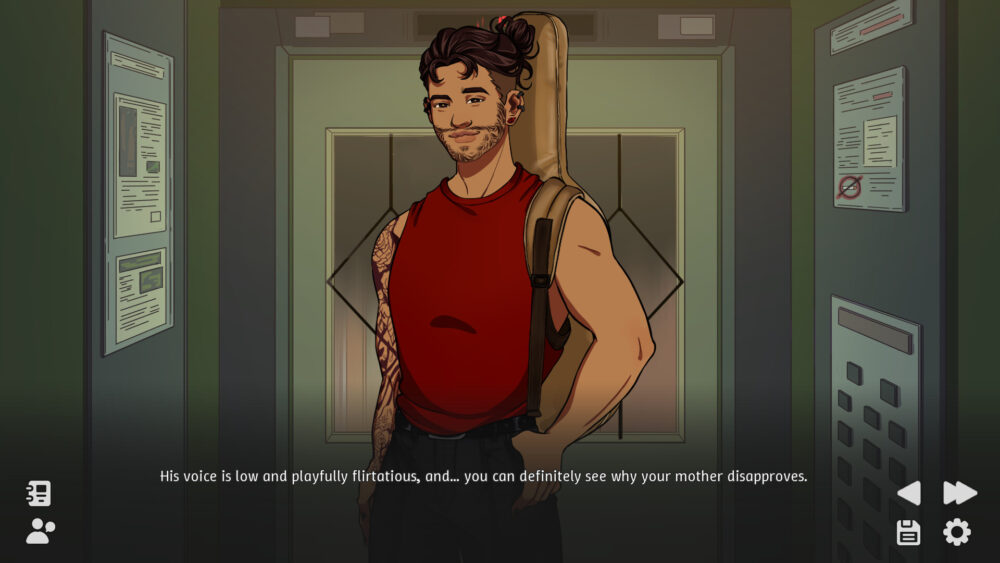
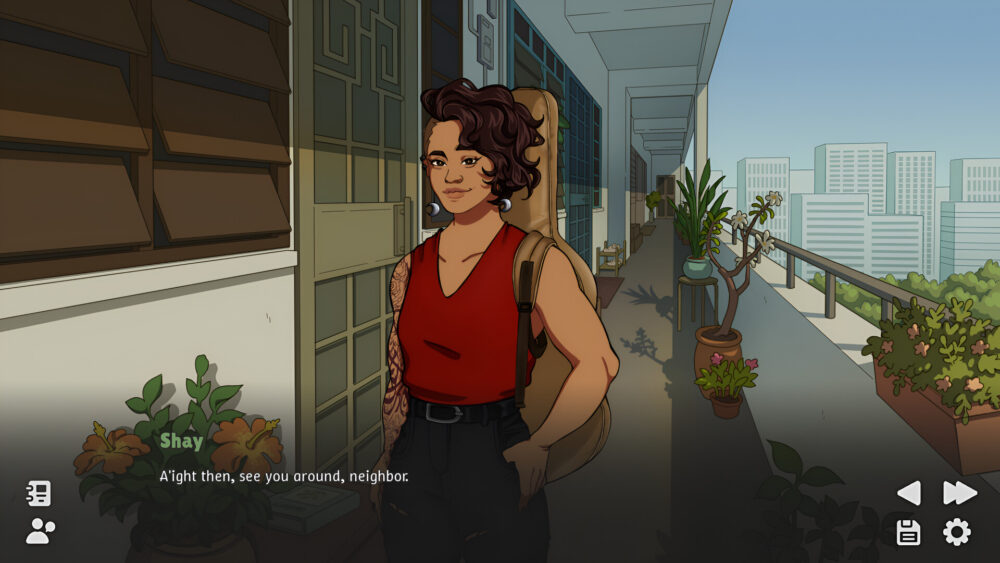
Shay is your neighbour’s new tenant, an outdoorsy musician who flirts with you at every chance. They’re a kindred spirit, and an electric connection that could turn serious, or not. They give you a glimpse of a life in Singapore you never got to have, and remind you that life always goes on, sometimes in the best way.
To make each route feel worth choosing, I tried not to write any of them as the “right answer.” Every route makes you give something up for what you gain, and you’re not quite the same person after.
How did you balance the cosy side of the holidays with the harder parts of going home?
Going home is always both at once. You can be laughing and karaoke-ing with your family and new love interest, only for a song to come on and remind you of an ex you still live with. You can be running around the house on a little scavenger hunt with your family, only for your mother to say something about your job as a musician. So I didn’t treat them as separate moods to balance. They bleed into each other.
What does the future hold for you and Monsoon Games?
Merry Crisis launches on December 9, 2026. After that, the fully text-based version comes out in Q2 2027. Think of it as the book to go with the movie.
I’m also working on College Tennis: Origin Story, a fully text-based slice-of-life sports drama. You play a freshman tennis player making friends, maybe falling in love, and getting into all kinds of college shenanigans. The aim is to release it in 2027.
We’re exploring other ideas as well, all of them narrative-rich, with our special brand of cosy and bittersweet.
About The Author