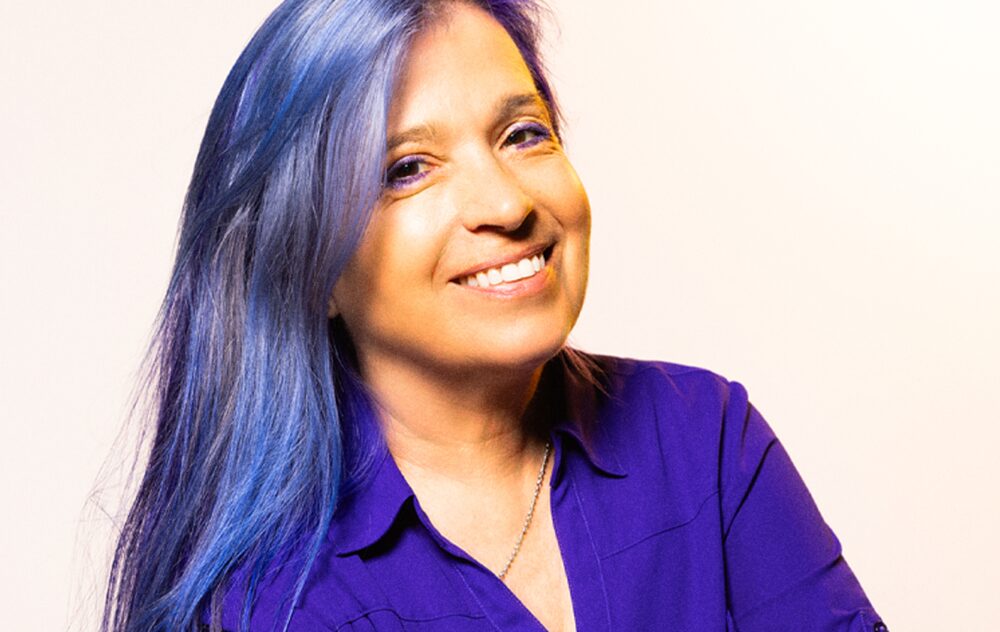
Leslie Pirritano on her games industry career and launching Prisnodo
Leslie Pirritano has spent more than 20 years in the video game industry, including nearly thirteen years at Nvidia and ten years at AMD, where she held a variety of roles. While at AMD, what began as a collection of side projects grew into a role focused on supporting content creators through a diversity, equity and inclusion lens — helping talented people from underrepresented communities build meaningful relationships with companies like AMD.
After a long career in the corporate world, she decided it was time to start something new. She founded Prisnodo, a company created to strengthen the connection between content creators and the corporate world. At the heart of everything she does is a simple idea: people deserve to be seen, supported and given opportunities to succeed.
I had the opportunity to speak with her about her career and the launch of this new venture.
Hi Leslie, thanks for joining me! Tell me about your journey that got you to the position you’re in today?
My career journey has been almost entirely accidental. I walk through life, peek through an open door and ask myself, “Does that look fun or fulfilling?” If the answer is yes, I walk through it.
Throughout my career, I’ve paid attention to what a company and its customers need, especially needs that aren’t currently being met. That has often led me to create new roles rather than follow a traditional career path.
My last role at AMD began as a series of side projects while I was working on the developer relations team. For many years, I had seen a need to better support and promote women, LGBTQ+ people, BIPOC creators and others from underrepresented communities. Those projects allowed me to demonstrate the business and community value of working with content creators, particularly creators whose perspectives have historically been overlooked.
Eventually, those side projects became my role. My goal was to help make AMD’s internal values visible externally through the people and communities they support.
Now I’m taking all of this a step further, with Prisnodo. I’m fortunate to have earned many supporters throughout my career. Because of this I have been able to pull together an incredibly talented group of content creators and have a path for bringing our collective communities to companies who partner with us. I’m very excited to take this next journey with all these creators and partners.
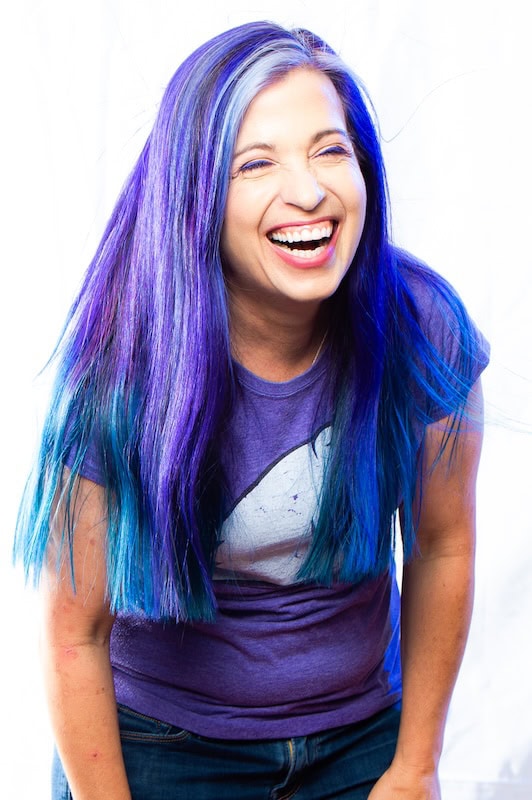
You’ve previously said that your job title is ‘Your Best Friend’ – can you explain what that means and how you came to adopt it?
“Your Best Friend” is both a philosophy and a reminder to myself. Whatever my official role may be, I want the people around me, coworkers, customers, creators and partners, to feel that I’m treating them the way a best friend would.
A best friend cares about your happiness and success. They are kind, respectful and honest with you. They listen. They want to create situations in which everyone benefits, rather than succeeding at someone else’s expense.
It doesn’t mean agreeing with everything or avoiding difficult conversations. Sometimes being a good friend means telling someone what they need to hear, but always with care and with their best interests in mind. That philosophy shapes how I build relationships and how I approach business.
You recently launched your own company called Prisnodo, tell me more about what the company’s mission is.
Prisnodo’s mission is to help companies and content creators build more authentic, equitable and mutually beneficial relationships.
Creators, particularly those from underrepresented communities, often have tremendous talent, influence and insight, but they may not have access to the people, language or systems that drive corporate opportunities. At the same time, companies genuinely want to work with diverse communities but don’t always know how to begin, whom to approach or how to build trust.
Prisnodo is about closing that gap. I want to help creators understand and navigate the corporate world while helping companies work with creators as valued partners, not simply names on a list or boxes to be checked.
Why is it important to have a bridge between content creators and the corporate world?
Content creators and corporations often speak very different languages. Creators build relationships through personality, authenticity and community. Corporations tend to work through processes, objectives, budgets and measurable outcomes. Both sides can offer enormous value to each other, but misunderstandings can happen when no one helps translate between those worlds.
A bridge makes it possible for creators to maintain their authentic voices while understanding what companies need. It also helps companies recognize the value creators provide beyond follower counts or impressions. Creators understand their communities in ways that a spreadsheet never could.
That bridge is especially important for diverse creators, who may not have inherited the same networks or access as others. Talent is everywhere; opportunity is not. I want to help change that.
What’s your five-year dream for Prisnodo?
My five-year dream is for Prisnodo to become a trusted home for creators and companies that want to build relationships based on respect, authenticity and shared success.
I would love to see Prisnodo opening doors for creators who might otherwise have been overlooked, helping them turn their talent into sustainable careers without asking them to change who they are. I also want companies to see that inclusion is not an obligation or a momentary campaign. Inclusion is a smarter, richer and more human way of doing business.
Ultimately, I want Prisnodo’s impact to be visible in the opportunities people receive, the careers they build and the communities that see themselves represented.
As an LGBTQ woman, what challenges have you faced in the games industry?
There is an endless list of examples! Since coming out, I’ve never been shy about being a lesbian. It isn’t how I introduce myself, of course. I simply talk naturally about my wife, who has been my life partner for 23 years. She is my joy, my rock, and without the foundation that is us I could not have achieved my level of success.
Earlier in my career, when some male coworkers learned that I was LGBTQ+, they began treating me as if I were “one of the guys”, which I am not. At the other extreme, there were occasional encounters with the offensive “I could turn you” mentality. I had to learn how to navigate and challenge those situations.
There was also the industry’s narrow definition of a “gamer.” The men around me were automatically considered gamers, while women, LGBTQ+ people and others who didn’t fit the stereotype were frequently excluded or had to work exponentially harder to prove themselves as a gamer.
I remember the moment I realized that I was a gamer as vividly as I remember coming out to my family. I used to produce gameplay videos, before OBS and easily accessible capture software existed. I would study an early build of a game, plan the video and then bring in the “resident gamer” to play through the sections I had selected.
One day, I was directing him through the game Just Cause and he wasn’t quite getting what I needed. I took over the keyboard and mouse and showed him. The studio manager suddenly said, “Okay, we got it.” They had captured my gameplay.
That was the moment it clicked: I’m the gamer. I am a gamer.
What more does the industry need to be doing to address issues of equality and diversity?
The industry needs to make inclusion part of its normal, everyday practice, not something reserved for a particular campaign, awareness month or public statement.
That means ensuring that diverse people are visible and that their voices are heard across game development, characters, stories, gameplay, marketing and community engagement. But visibility alone isn’t enough. Companies cannot create a diverse character or feature diverse people in an advertisement and consider the work complete.
Video game companies and the industries surrounding them need to hire, retain, support and promote people from underrepresented communities. Those people also need the authority and resources to influence decisions. True representation happens when diverse voices are present not only on the screen, but in the rooms where products, strategies and stories are shaped.
What would be your advice for a young woman starting out or looking to get into the video games industry?
Find what brings you joy and pursue it fearlessly. Your path doesn’t have to look like anyone else’s, and you don’t need to have your entire career mapped out before you begin.
As you move forward, find friends, mentors and supporters, the people who genuinely have your back. There may be moments when you question whether you belong or when other people underestimate you. Having a trusted community around you will help you remember your value.
Women are sometimes taught to make themselves smaller, soften their opinions or wait until they meet every qualification before stepping forward. Don’t wait for permission to be curious, ambitious or visible. Ask questions. Apply for the opportunity. Walk through the interesting door.
Most importantly, don’t confuse being new with being incapable. You are allowed to learn, and you are allowed to take up space while you do it.
What was your earliest memory of video games as a child?
In high school, I asked for a Commodore 64 for Christmas. My family was poor, so I couldn’t afford additional games and mostly played the one it came with, Fraction Fever.
I started working when I was 14 and spent a lot of my free time at the bowling alley arcade. Galaga was my jam. Back then, I could make a quarter last for an hour!
My college didn’t have computer labs until my final year, so arcades were really my only opportunity to play. A quarter doesn’t last as long now as it did when I was a teenager, but I still love every opportunity I get to play Galaga.
What are you currently playing?
I’ve started playing the Assassin’s Creed Black Flag Resynced, and I’m having a lot of fun with it. I love attempting to be stealth, because that is truly comical for me. My weapons also set my enemies on fire, which for some nonsensical reason makes me very happy!
Some of my all-time favorite games include all Borderlands, Horizon Zero Dawn, Horizon Forbidden West, the Mass Effect series, the Batman: Arkham series, and most of the Assassin’s Creed series, I love landing a good headshot with an arrow. The humor in Borderlands always gives me the giggles, Mass Effect gave me a story I could become completely invested in, and the Arkham games were simply a lot of fun. Ultimately my go-to game is always Borderlands, currently Borderlands 4.
South of Midnight, Arknights Endgame, Palworld, and Yakuza series are all on my to-do list. There’s just so much fun to be had in a long list of a variety of games!
What does the future hold for you?
Hopefully, more interesting doors.
I want to continue supporting creators, building bridges and creating opportunities for people whose talent deserves to be recognized. I’m excited to grow Prisnodo and explore how it can make the relationship between creators and companies more equitable, human and effective.
I also want to keep challenging expectations about who belongs in gaming, whose voice matters and what leadership can look like. If I can help more people feel seen, find their confidence and realize, as I once did, “Yes, this space belongs to me too,” then I’ll know I’m heading in the right direction.
And, of course, I hope the future includes plenty of games, laughter and well-placed arrows.
Find out more about Prisnodo at prisnodo.com
About The Author