
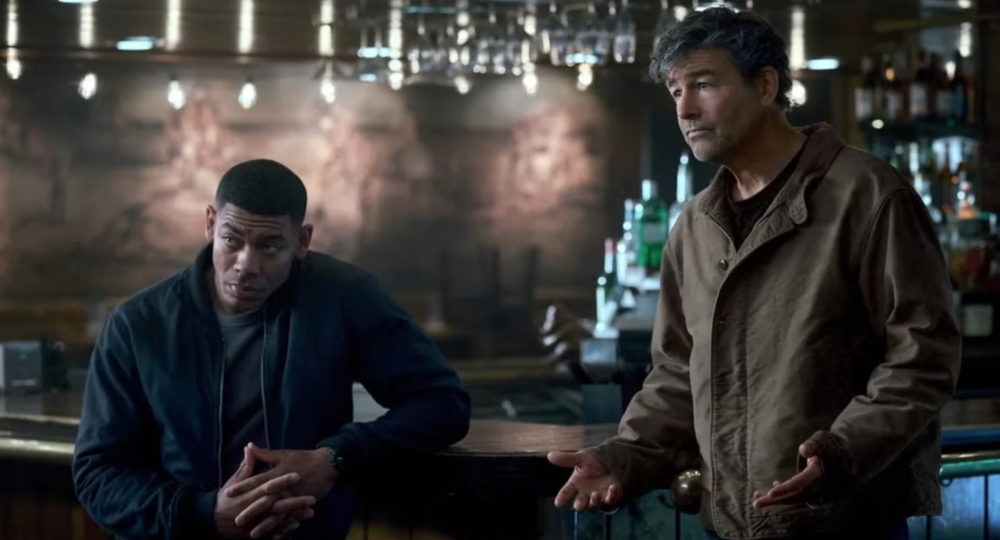
Aaron Pierre and Kyle Chandler on the love story of ‘Lanterns’
Some superhero shows offer amazing action, some offer emotional depth, and some offer revolutionary insights into whatever comic they’re adapting — and some, like Lanterns, manage to do all three.
This series reinvisions the emerald-hued superhero like audiences have never seen him (or, rather, them) before. It follows Hal Jordan (Kyle Chandler), the DCU’s first Green Lantern, as he trains the quiet John Stewart (Aaron Pierre) to eventually take over his mantle.
The first season has been applauded for how it seamlessly intertwines the high stakes of superpowered conflict with the dynamic relationship between our two main characters. It thoughtfully touches on themes of societal negligence and the true cost of power, all while offering a harrowing mystery plot and a level of inclusivity that few recent ‘nerdy’ projects have provided.
With all of these elements and more, there are countless ways to characterize this first season of Lanterns. But, for stars Aaron Pierre and Kyle Chandler, it’s clear what this TV show truly is: it’s a love story.

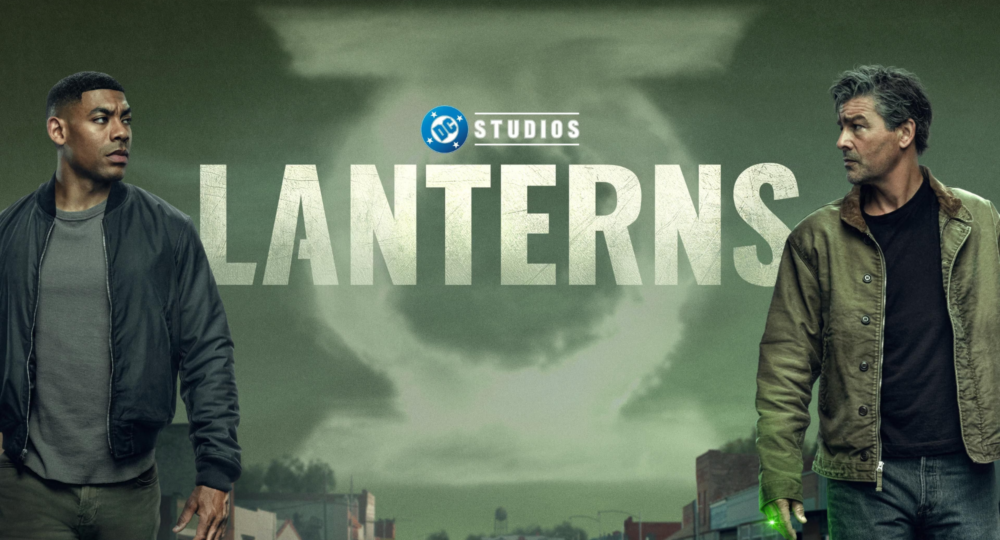
“I think to call this opportunity to portray John Stewart a gift would be a massive understatement,” said Aaron Pierre, in a press conference held after Lanterns’ season one finale. “He is just like any of us, yet he is so mighty. And I think that is what appealed to me so much…the constant opportunity, in portraying him, to excavate his humanity.”
Lanterns’ first season spans multiple decades, following John Stewart as a young boy being groomed to become the hero — by being subjected to horrific ‘fear training’ by his parents — before eventually becoming Jordan’s protegé and learning how cynical the resident Lantern has become. Through multiple time jumps we watch as the pair take on intergalactic threats (as well as each other) before Hal is murdered, with John spending the last few episodes trying to uncover his once-mentor’s killer…with the help of a sentient hologram of Hal, of course.



While Lanterns doesn’t center LGBTQ+ identity — although one scene implies that this version of Hal Jordan is pansexual — the franchise has a long history of queer inclusivity. Not only is the first-ever Green Lantern, Alan Scott, a confirmed gay man, but fan-favorite Lantern Sojourner ‘Jo’ Mullein continues to make history as one of the few queer Black women in DC comics.
It’s unfortunate that openly LGBTQ+ characters like these didn’t appear in the Lanterns series…but that doesn’t mean the show isn’t queer.
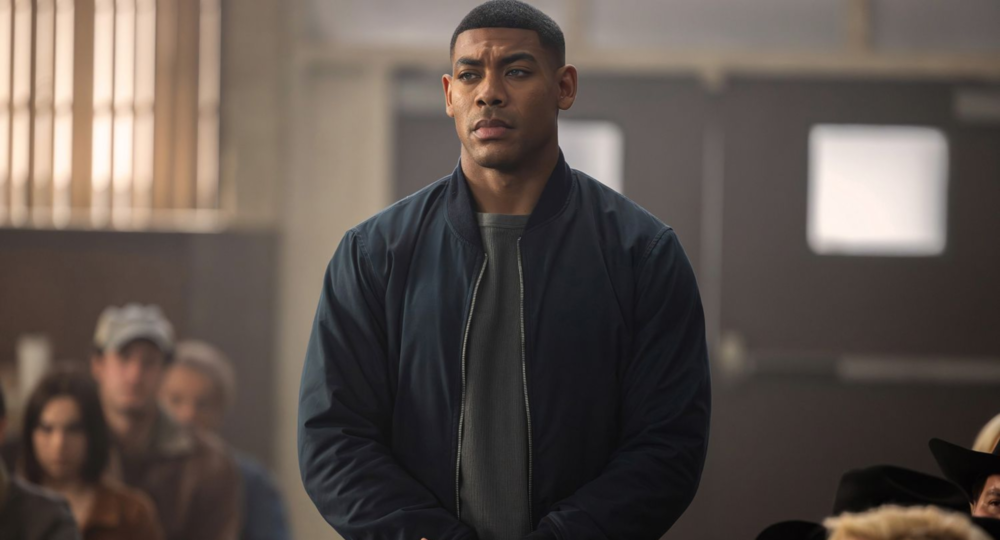
Because what it lacks in this representation, it makes up for in the constant messaging of acceptance, and why we should love one anothers’ differences instead of going to war over them. Lanterns shows this largely by exploring what it means for Stewart to become a superhero as a Black man in America, with Pierre explaining, “I think [Lanterns] highlights that our differences and our nuances need not be a point of contention. They can be a point of education.”

The series has been applauded — and review bombed by bigoted watchers — for showcasing the many racist indignations faced by Black communities today. “[Lanterns] allows people who’ve experienced [racism] to feel seen, feel heard, and feel understood,” Pierre continued. “And to those whose experience it isn’t, it gives a number of beautiful access points to be able to empathize with it and understand it a little more.” This exploration of this adds a vital depth to the entire project, and it makes the platonic love story between Hal and John so much more impactful as the season comes to an end.
Lanterns season one ends with a heartfelt ‘I love you’ between Hal and John. This moment sticks out for many reasons; it comes after eight episodes of conflict for the pair and is a perfect encapsulation of their fraught relationship. But along with narrative payoff, it also stands out because it allows these two men to show affection for one another in a scene of pure vulnerability — something we rarely ever get to see in superhero media.
Too often, adaptations still worry about how ‘gay’ it would appear for men to show their connection onscreen, with an overwhelming amount of heteronormative masculinity being expected from superheroes at all times. Lanterns shirks that discriminatory fear constantly by emphasizing how important these moments of genuine expression between men are. It hit particularly hard for Kyle Chandler for Hal to have this moment with John, with the man detailing. “The father/son aspect of this show, I think is…for me, I lost my pop when I was 14.”
“And, you know, Hal had a father/son relationship with John,” he said. “It became apparent while we were shooting. And yeah, the love story is: he won my heart over in the end, and I was able to do what my father would have done for me.”
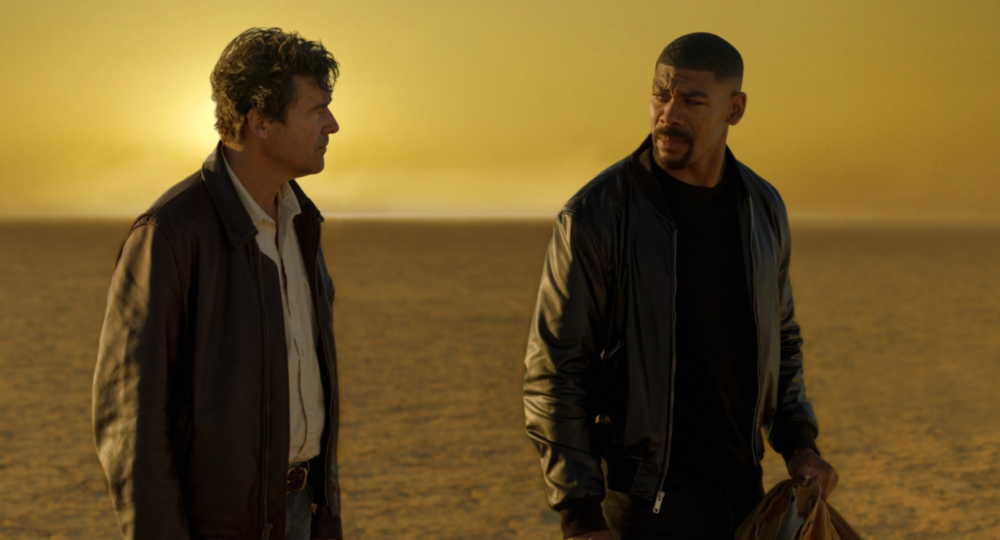
Both actors spoke to how important it was to criticize topics like discrimination and toxic masculinity — things that can easily be fostered in fandoms —by allowing these characters to be emotionally vulnerable in a way so many men are discouraged from today.
Now, going forward in new seasons, Lanterns definitely need to honor its LGBTQ+ roots. But it has paved the perfect path for this inclusion by making it clear: Lanterns is for everyone.
Through the loving bond of its main characters, it stresses how we all have a duty to be our own superheroes by uplifting and protecting people of all identities from harm. Aaron Pierre hopes that this is what viewers ultimately take away from Lanterns, saying, “From the very beginning, I said, ‘I really hope that folks watch this at home, and they are like, ‘If I can just figure out where to get my own application, maybe I can be a Lantern as well. Maybe I can be part of the Green Lantern Corps [someday].’”
About The Author