
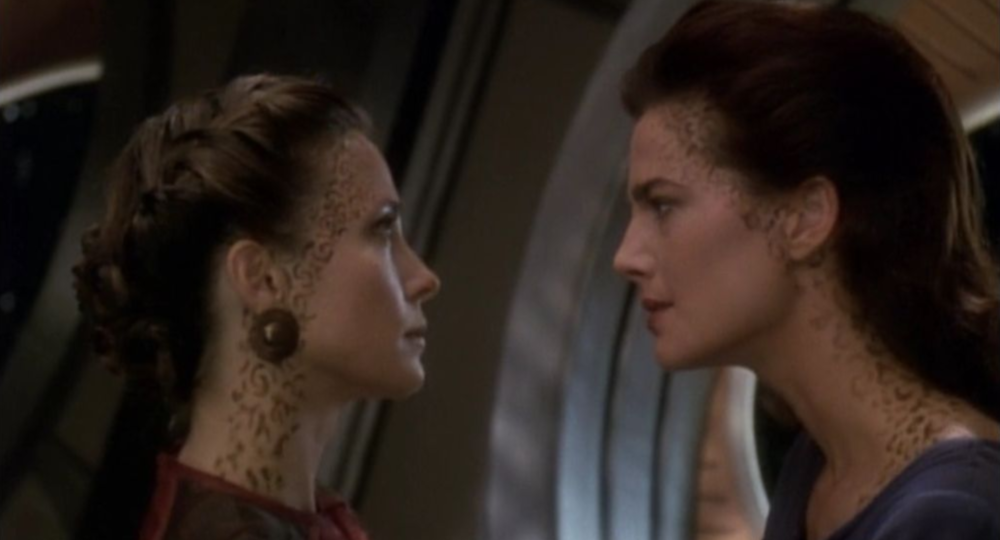
Remember when Star Trek featured one of TV’s first lesbian kisses?
The science fiction genre has always been used to explore themes of gender identity and sexuality, and in no franchise is that more true than in Star Trek. As the franchise celebrates its 60th Anniversary and with the latest season of Star Trek: Strange New Worlds ending last week, we thought it was time to look back and remember that Star Trek has always been pushing boundaries, driving visibility and celebrating ‘Infinite Diversity in Infinite Combination’.
Created by Gene Roddenberry, every iteration of this trailblazing series has used its intergalactic setting to explore various themes of LGBTQ+ identity. This exploration has become even more evident in recent years, with projects like Discovery and Lower Decks proudly spotlighting queer characters and performers. But Star Trek’s advocacy isn’t a new thing. Since its first episode all the way back in 1966, the show has educated thousands of viewers on issues like racism and homophobia.
It’s been a vital cultural force that uses scientific allegory to create real change. And while many plotlines are amazing examples of Star Trek’s activism, few have had as much of a lasting impact as the the episode which featured on of TV’s first ever lesbian kisses, Star Trek: Deep Space Nine’s ‘Rejoined.’
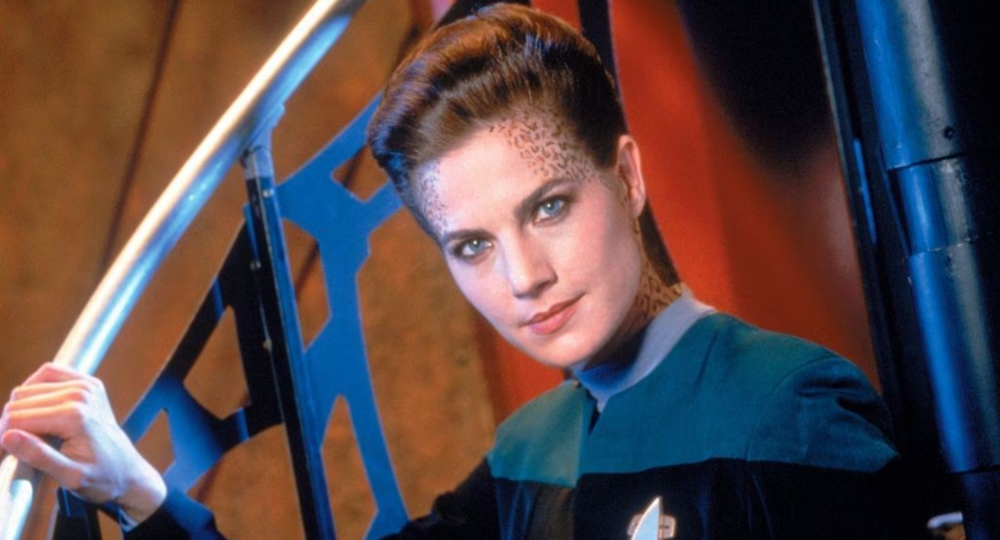
The second spin-off of the Original Series (third if you count the Animated Series), Star Trek: Deep Space Nine follows the members of the titular space station as they navigate universal diplomacy while situated scarily close to a ‘stable’ wormhole. Fans loved this new approach to Star Trek’s world-building, one that not only featured the sci-fi adventures the franchise was known for, but that delved into the complex political ramifications of this interstellar premise.



One of the program’s fan-favorite characters (especially for LGBTQ+ viewers) was Jadzia Dax; Jadzia was the station’s science officer and a member of the alien species Trill. They were a humanoid species whose most accomplished members bonded with alien symbiotes, nigh immortal beings who carried all of their previous hosts’ personality and fusing them with their current one.
Many queer viewers immediately noticed the complex gender dynamics of this concept, with Jadzia Dax’s dynamic approach to identity due to her Trill symbiont making her an early depiction of genderfluidity on TV. This already had LGBTQ+ fans excited, meaning that they were absolutely thrilled in season four when the series went a step further and introduced an important figure in Jadzia’s (past) life: Lenara Kahn, the wife of the symbiont’s previous host.




In ‘Rejoined,’ viewers see Deep Space Nine welcome a group of Trill scientists, one of whom being Kahn. The episode explains that romance between them would be considered heinous to Trill culture — a clear reflection of real-world homophobia — and would lead to the women’s dual exile. But each scene sees the pair grow closer, with Dax and Kahn reminiscing on their past love while growing affection for the forms they each inhabit now. This culminates in a jaw-dropping kiss, with the pair’s death-defying romance causing them to risk everything if it meant a life with the being they love.
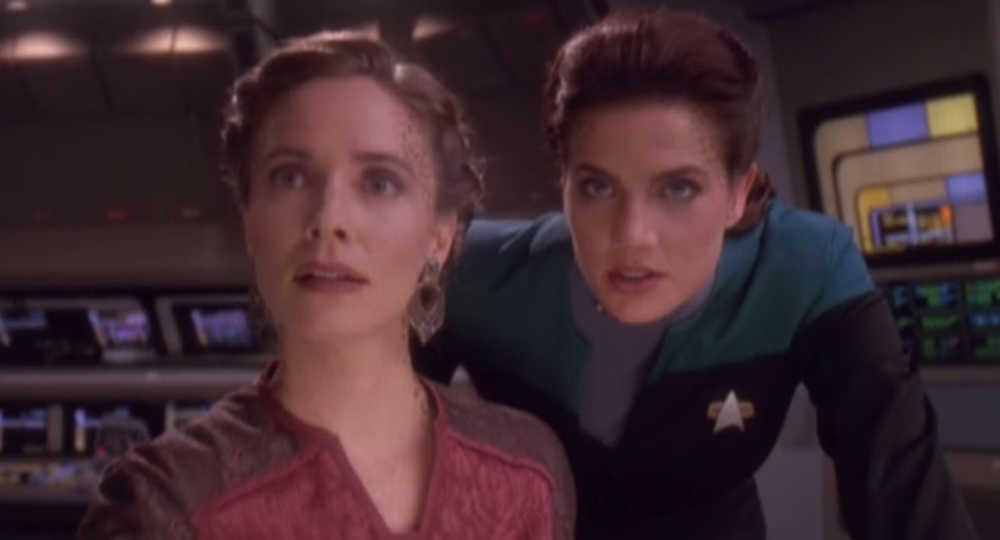
Suffice to say, audiences had quite a reaction to this moment. There was a resounding wave of negativity when the episode premiered in 1995; audiences across the U.S. criticized the show for having the audacity to respect all kinds of love. Some stations even edited the kiss out of the broadcast, revoking the episode’s most resonant scene and robbing thousands of viewers of a chance to watch LGBTQ+ representation onscreen.
But, luckily for so many people then and now, most stations aired the episode as is.

Meaning that while there were so many people upset by the episode, there were just as many (if not more) who were thrilled to watch one of the first lesbian kisses in television history. It wasn’t just the kiss that made this moment so monumental, though, but the fact that it came after a whole episode of romantic development. Dax and Khan are given multiple scenes to talk, to flirt, to look back their past relationship and realize that there was still a chance for their current forms in the present.
Queer relationships then and now still struggle to receive this level of nuance onscreen. So episodes like this remind everyone watching of the immense complexities of modern queer love — not only the beautiful feelings that fuel these relationships, but the unfair societal hurdles people must navigate through to be with the person they adore.
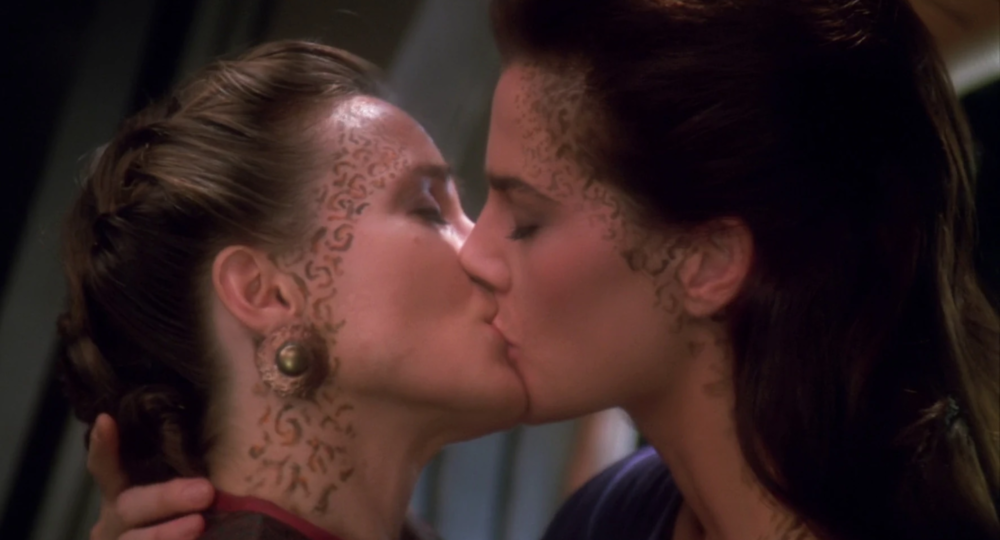
Sadly, things do not end with a ‘happily ever after’ for Dax and Kahn. After this kiss (and a near-death experience) Dax realizes that she is willing to sacrifice her place in Trill society if it means being with Kahn. But, unfortunately Lenara realizes the opposite, departing Deep Space Nine and leaving the science officer heartbroken.
While this dower ending definitely isn’t preferred by many queer viewers, it doesn’t take away from the massive impact this episode had. It opened the door for not only more acts of queer romance onscreen, but set a beautiful standard for how those love stories should be written. It stressed the importance of nuance in televised queerness and made thousands of viewers question their biases.
This all truly shaped how lesbian love is allowed to be portrayed on TV today, meaning it’s no wonder why LGBTQ+ fans consider it one of the Star Trek franchises’ best, most influential episodes.

About The Author